Six trainings. Three hundred hours. No examination, no certification, and nothing you cannot check yourself.
The WMO Field Series teaches what a practitioner actually does: read a conflict, report it without making it worse, work in an information environment that is being manipulated, recognise the procedures a place already has, handle land, water and movement, and convene a conversation in a community that has stopped having them.
Begin with Volume I, EUR 390 →
Why Six, and Why in This Order
Each volume stands alone and assumes nothing from the others, so you can begin anywhere. The order exists because the subjects build.
Reading a Conflict teaches the analysis. Peace Journalism asks what happens when that analysis is published. Disinformation and Polarisation deals with the environment it travels through. Traditional Conflict Procedures concerns the repertoire a place already has, which is usually older than ours. Displacement and Resource Conflicts is where land, water and movement come together at once. Dialogue in Divided Communities closes the series, on convening a conversation without any authority to do it.
The Six Volumes
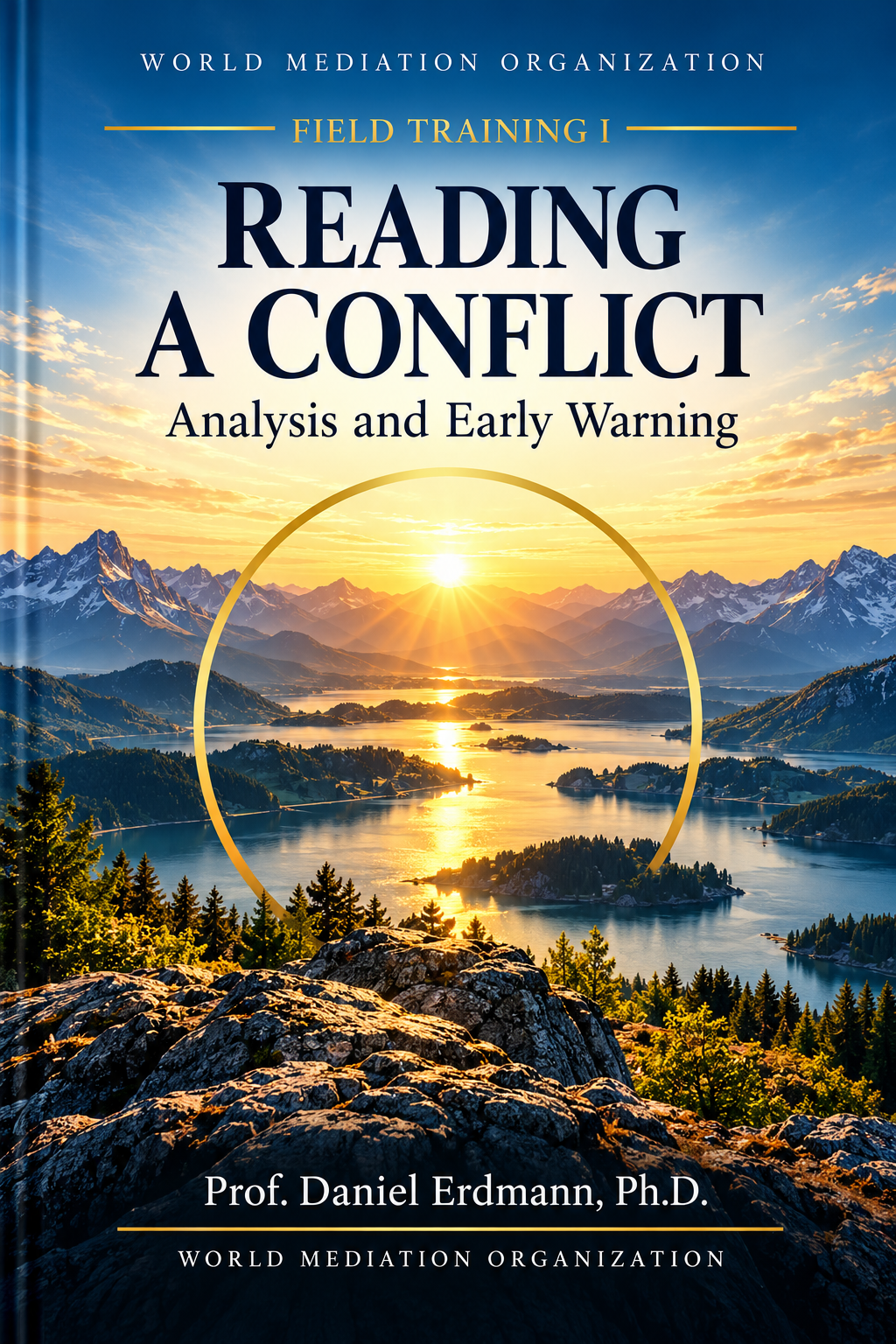 I
Reading a Conflict: Analysis and Early Warning
Situation, parties, object, workability. Escalation after Glasl, ripeness after Zartman, actor mapping that names people rather than organisations, indicators that are cheap enough to be repeated, and writing that survives being read by the people it describes. 134 pages.
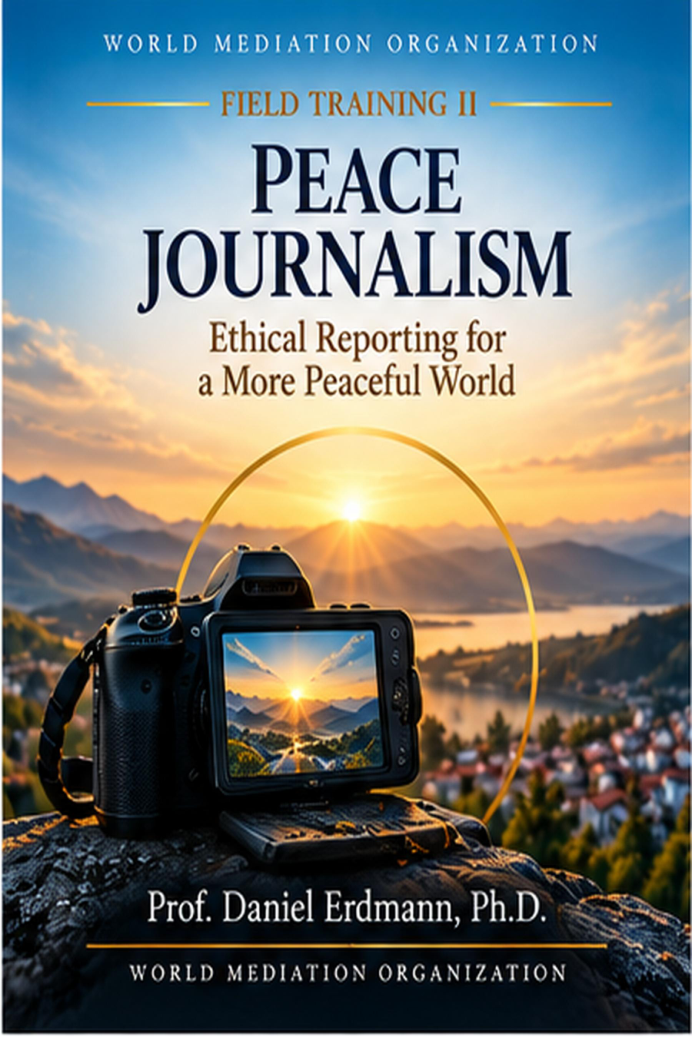 II
Peace Journalism: Setting, Field Research, Reporting
Reporting as an act inside a conflict. Framing, the two sides format and what it hides, field research and the risk it transfers to the person speaking, numbers that need a denominator, and the consequences that arrive after the reporter has gone. 151 pages.
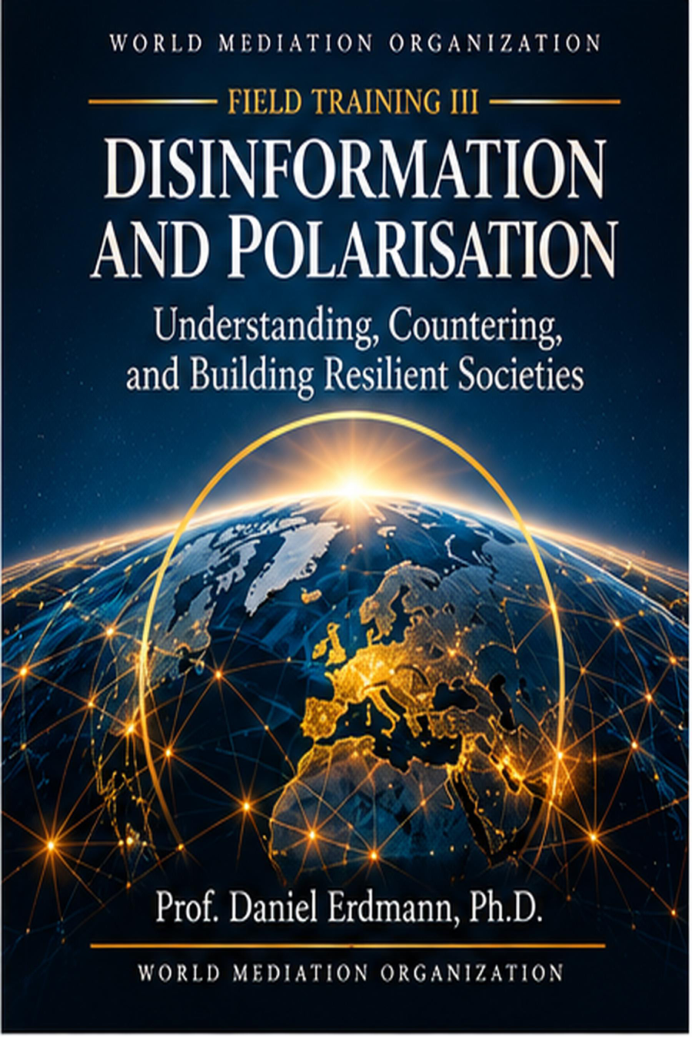 III
Disinformation and Polarisation
Why false material moves, the small number of techniques that do the work, the difference between distance of opinion and distance between groups, verification by ordinary questions, and why a correction has to name the alternative and reach the right audience. 138 pages.
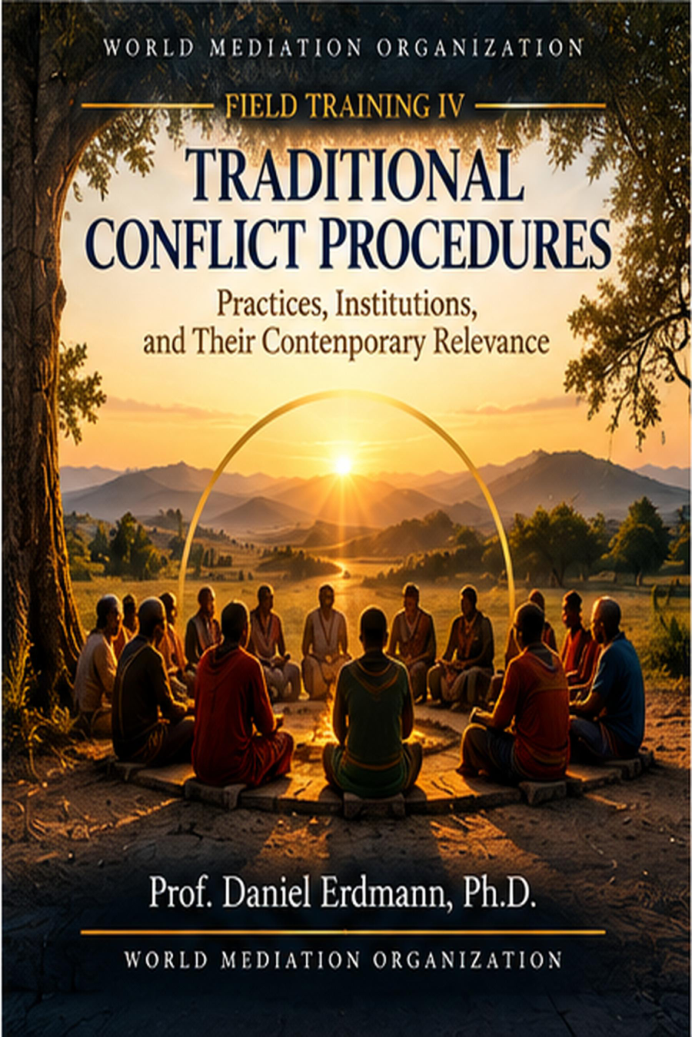 IV
Traditional Conflict Procedures
What societies built before our profession existed. The common architecture across regions, twelve cases arranged by their relationship to the state, what transfers and what cannot, the uncomfortable questions about who is not in the room, and how to work alongside without absorbing. 162 pages.
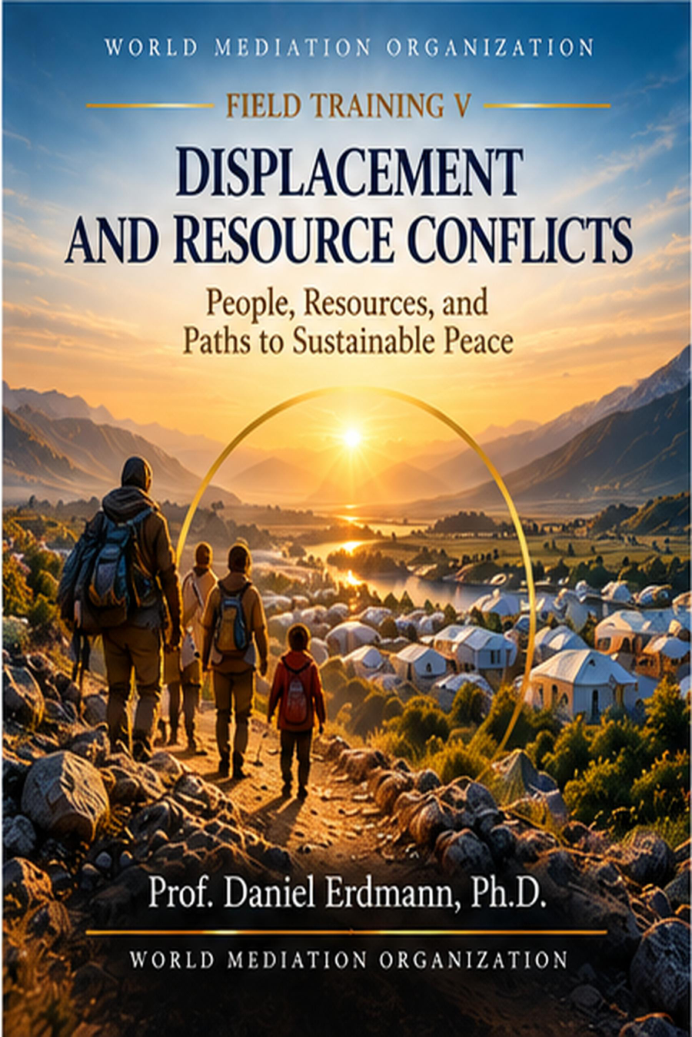 V
Displacement and Resource Conflicts
Land, water, movement, and the people who arrive. The four links between a physical change and a killing, the patterns that repeat across continents, what forms inside a displaced population, who decides and who is never in the room, and the small number of arrangements that actually hold. 162 pages.
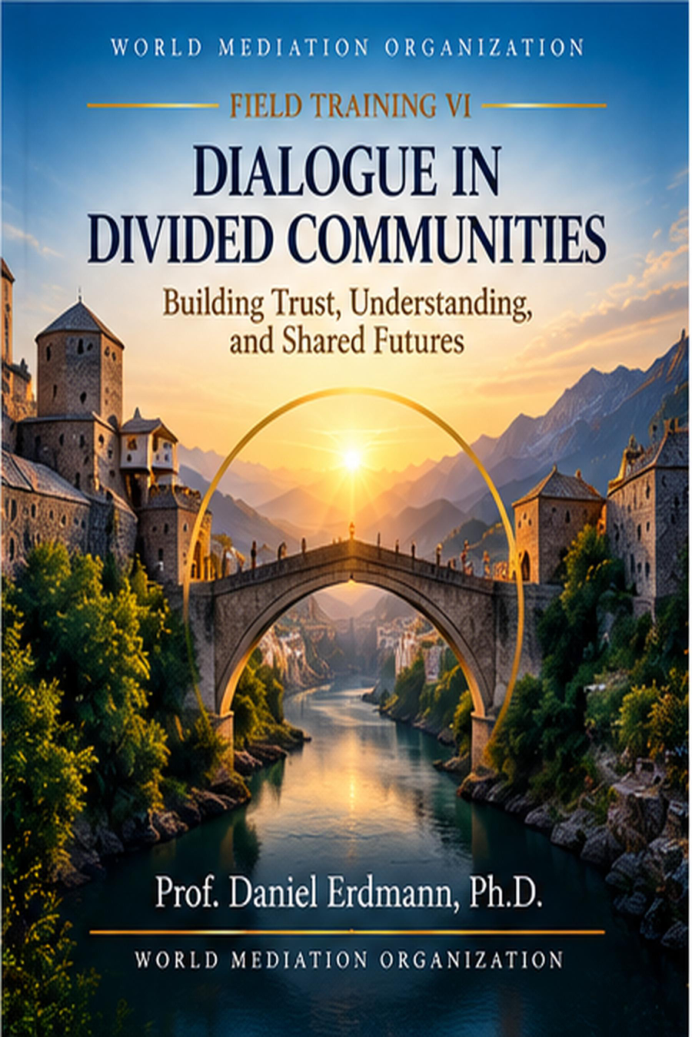 VI
Dialogue in Divided Communities
Convening a conversation in a place that has stopped having them, by people who hold no qualification anybody recognises. In preparation.
What You Get, and What You Do Not
Each training is a self study volume of six chapters, twelve required readings, sixty questions with the answers, six exercises, six written analyses and a final assignment, representing not fewer than fifty hours.
Nothing is submitted, nothing is scored, and no work is reviewed. On completion you issue yourself a Statement of Completion in your name, recording what you studied.
It is not a certification. It confers no title. It does not enter you in the WMO Mediators Directory. The certification of practitioners is a separate matter, conducted under examination, and verifiable by anybody against a public register.
The Series Certificate
Complete all six and the record becomes a single certificate: some nine hundred and twenty pages, thirty six chapters, seventy two required readings, three hundred and seventy two questions, thirty six exercises, thirty six written analyses, six final assignments, and not fewer than three hundred hours.
There is no discount for buying six at once and no bundle. Each is EUR 390, bought when you want it, and the certificate follows from the six statements rather than from a purchase.
Price, Terms, and the Credit
EUR 390 per training. Access for twelve months. Statement of Completion issued the same day you finish.
The fee for each Field Training is credited once against the Expert Training if you book within twelve months, which means a practitioner who studies two volumes and then decides to seek certification has paid nothing extra for the study.
Who These Are For
Practitioners who work where these conflicts are: mediators and conflict advisers, programme staff, journalists and communications officers, local authority officials, researchers, and the national staff who hold the institutional memory that this sector routinely treats as support.
They assume no prior training and no fieldwork. They assume you are prepared to write things down and to find out later that you were wrong.
Questions People Actually Ask
Does it matter which one I begin with?
No. Each assumes nothing from the others. If you have no preference, begin with Reading a Conflict, because everything else rests on the analysis it teaches.
Will anybody read my written work?
No, and that is deliberate. The analyses are written for you, assessed by you against the questions provided, and kept by you. Nothing is submitted.
Is the Statement worth anything to an employer?
It records completed study honestly and it claims nothing further. Anybody who represents it as a qualification is misrepresenting it, and the document says so on its face.
How long does one take?
Fifty hours or more, including the required reading, spread over whatever period suits you within the twelve months.
Can I use these to teach?
They are written for individual study rather than for delivery. A Trainer Manual is a separate matter and is in preparation.
Six trainings. Three hundred hours. Written by a practitioner, for practitioners, with the claims named and the evidence stated.
EUR 390 each, credited against the Expert Training within the year.